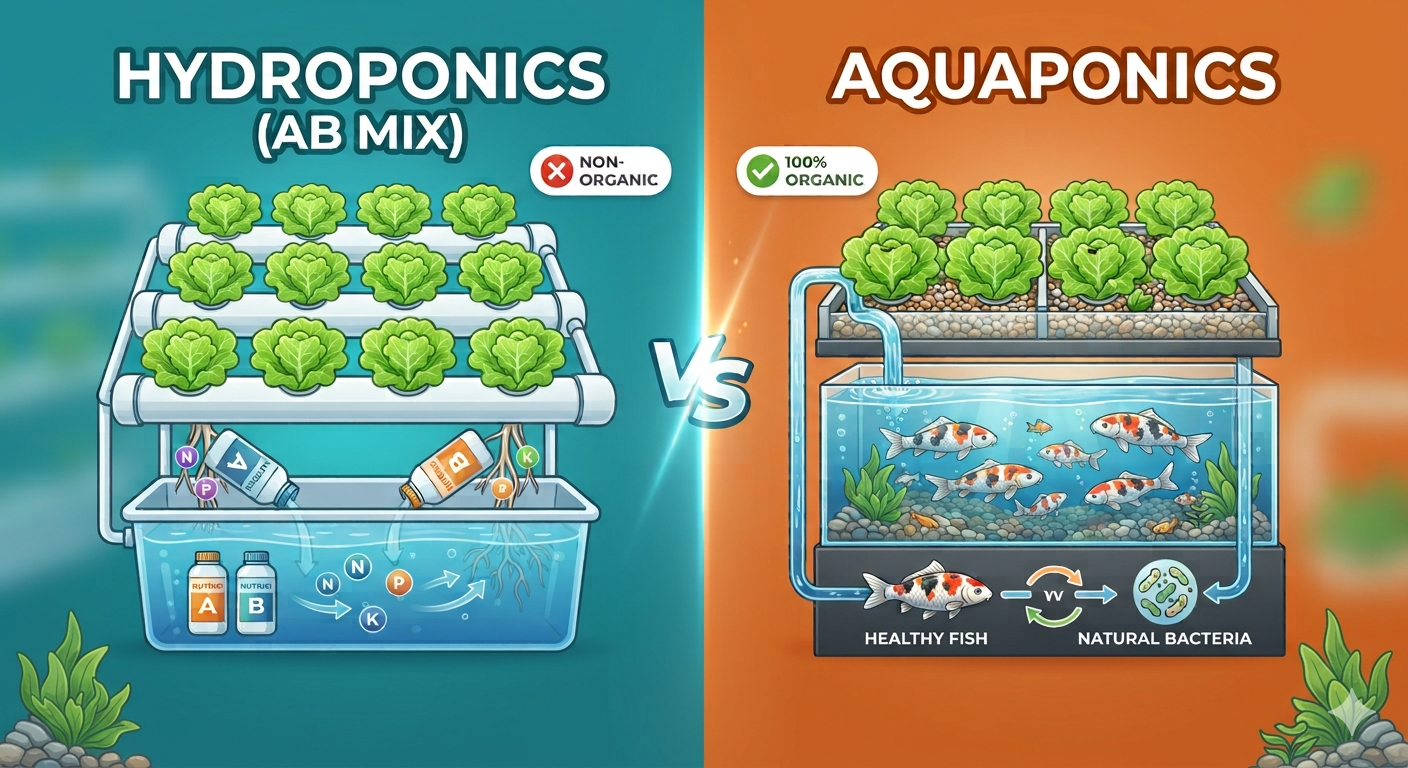
Hydroponics vs Aquaponics: Exposing the "Chemical" Veggies That Aren't as Organic as You Think!
Have you ever been on a healthy food hunt at the supermarket, spotted those aesthetic hydroponic veggies with squeaky-clean roots, and thought, "Wow, this is peak organic living"?
Plot twist: It’s actually not! Many people are still clueless that conventional hydroponic veggies are mathematically classified as non-organic. How is that even possible? Let’s spill the tea on why hydroponics isn't organic, and look at its downsides compared to its ultimate rival: Aquaponics.
Why is Hydroponics (AB Mix) Non-Organic?
The open secret behind hydroponics is its holy grail liquid called AB Mix. This nutrient solution is made from synthetic mineral salts—basically factory-made chemicals. Sure, hydroponic plants give off super clean vibes because they are soil-free and bug-free. But scientifically speaking, because their food comes from a chemical lab rather than Mother Nature, it’s a hard "no" for the organic tag. It’s an artificial, soilless setup.
The Downsides of Hydroponic Veggies vs Organic Aquaponics
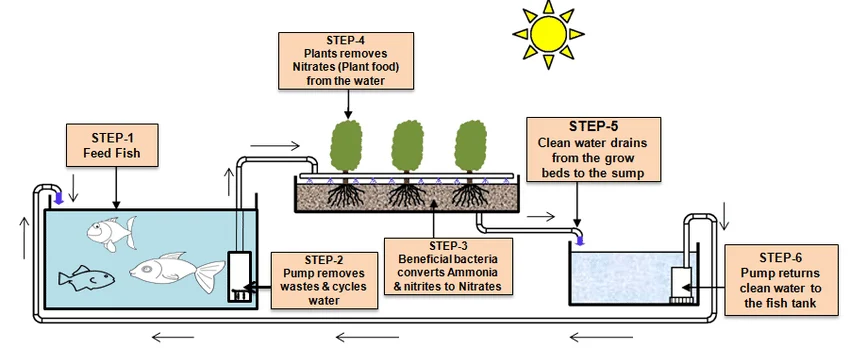
When we do a head-to-head comparison with aquaponics—a system that merges fish farming and plant cultivation into one ecosystem—hydroponics has some undeniable flaws:
- The Nitrate Overdose Red Flag: Some hydroponic growers love to "min-max" their yields by dumping heavy doses of AB Mix to speed up growth. If they forget to flush the system with clean air/water before harvest, the veggies end up holding high nitrate residues. Consuming too much nitrate long-term is definitely not it for your body. Aquaponics, however, relies on fish poop broken down by natural bacteria, making the nutrient profile way more balanced and mindful.
- Zero Good Bacteria (No Micro-Vibes): Because hydroponics runs in a super-sanitized environment, the veggies are sterile. The downside? They lack the natural microbiome (good soil-like bacteria) that is crucial for our gut health. On the flip side, aquaponics embraces a living ecosystem of beneficial microbes, giving you a more wholesome harvest.
- Sometimes Bitter or Just "Flat" Tasting: Ever bitten into a hydroponic lettuce and felt a weird bitterness? That’s a sign of a chemical overdose. Aquaponics veggies usually taste naturally sweeter and fresher because they absorb organic nutrients processed at a slow living pace by nature.
- Not Exactly Eco-Friendly: The wastewater from a hydroponic AB Mix system contains concentrated chemical elements. Disposing of it carelessly can cause water pollution (eutrophication). Aquaponics wins the sustainability check here because it's a zero-waste, circular economy system where the water constantly recycles between the fish tank and the plants.
The Verdict
Is hydroponics bad? Absolutely not! It’s still way cleaner and uses fewer pesticides than old-school soil farming. But if you’re trying to romanticize a genuinely organic lifestyle, care about sustainability, and want peak clean eating, Aquaponics veggies are the top-tier choice you need to add to your cart.